
Activity
27/01/2026
HerAqua Second M.ERA-NET Meeting: Progress Review and Technical Advancements Across Work Packages
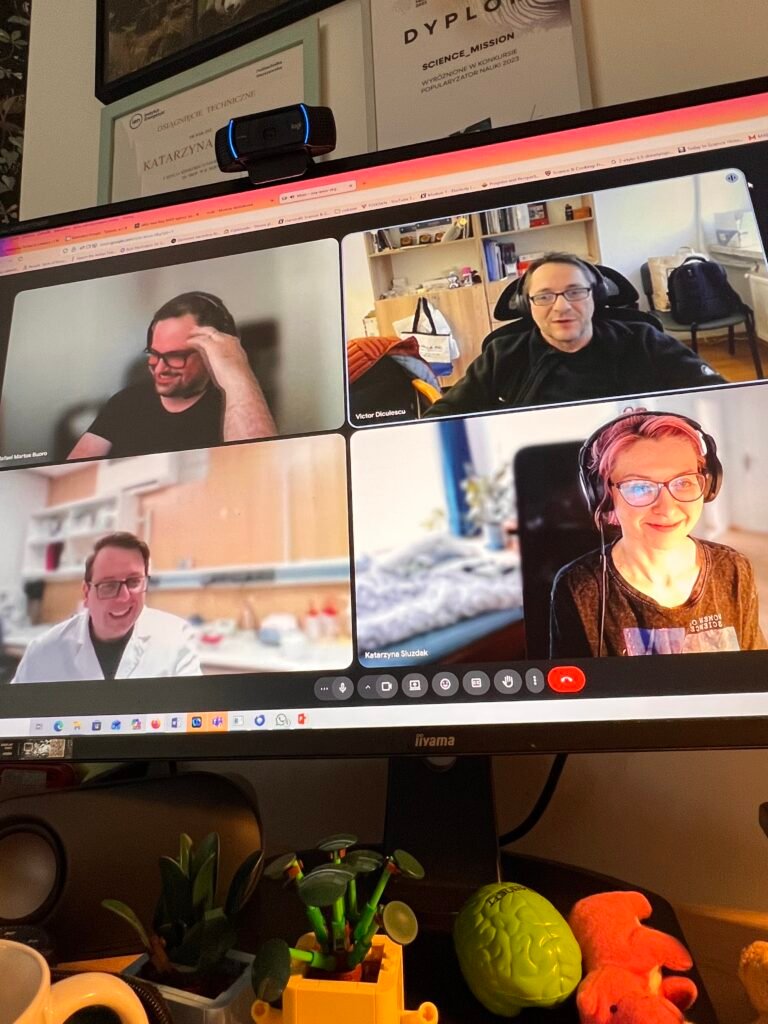
On 27 January, HerAqua consortium members convened online for the second M.ERA-NET meeting to assess initial progress and coordinate forthcoming activities across the work packages. The meeting was attended by Victor Diculescu, Rafael Buoro, Diego F. Pozo Ayuso, and Katarzyna Siuzdak.
The team led by Victor Diculescu reported the establishment of a calibrated 3D-printing workflow, the definition of microchannel design tolerances, and the application of numerical simulations to identify electrode geometries ensuring stable hydrodynamic and electrochemical performance.
Within WP2, Rafael Buoro presented sustainable synthesis routes for graphene quantum dots (GQDs) prepared from citric acid and glucose using natural deep eutectic solvents. When incorporated into conductive matrices, these GQDs demonstrated improved electroactive surface area and charge-transfer efficiency.
At IMP PAN, ongoing efforts focus on the optimization of fluoride-free electrochemical synthesis of MXenes from MAX phases. Although full delamination into separate layers remains challenging, progress continues under the supervision of Katarzyna Siuzdak.
Moving forward, partners will refine GQD-based electrode formulations, continue MXene ink development under the guidance of Diego F. Pozo Ayuso, advance microfluidic device design, and maintain coordinated dissemination through the project website, LinkedIn, and upcoming conferences.
27/01/2025
HerAqua Second M.ERA-NET Meeting: Progress Review and Technical Advancements Across Work Packages
On 27 February, HerAqua consortium members convened online for the second M.ERA-NET meeting to assess initial progress and coordinate forthcoming activities across the work packages. The meeting was attended by Victor Diculescu, Rafael Buoro, Diego F. Pozo Ayuso, and Katarzyna Siuzdak.
The team led by Victor Diculescu reported the establishment of a calibrated 3D-printing workflow, the definition of microchannel design tolerances, and the application of numerical simulations to identify electrode geometries ensuring stable hydrodynamic and electrochemical performance.
Within WP2, Rafael Buoro presented sustainable synthesis routes for graphene quantum dots (GQDs) prepared from citric acid and glucose using natural deep eutectic solvents. When incorporated into conductive matrices, these GQDs demonstrated improved electroactive surface area and charge-transfer efficiency.
At IMP PAN, ongoing efforts focus on the optimization of fluoride-free electrochemical synthesis of MXenes from MAX phases. Although full delamination into separate layers remains challenging, progress continues under the supervision of Katarzyna Siuzdak.
Moving forward, partners will refine GQD-based electrode formulations, continue MXene ink development under the guidance of Diego F. Pozo Ayuso, advance microfluidic device design, and maintain coordinated dissemination through the project website, LinkedIn, and upcoming conferences.
23.09.2025
Kick-off meeting
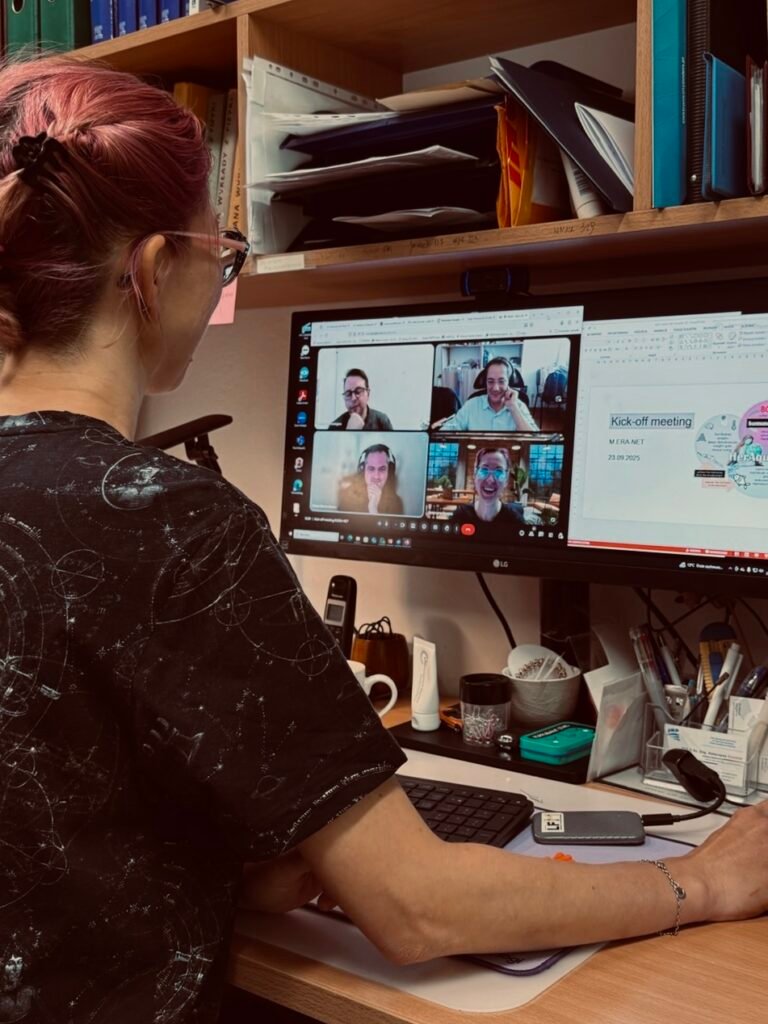
The HerAqua project consortium held its online kick-off meeting on-line, bringing together all partner institutions. During the meeting, team members introduced their organizations and outlined the main objectives and activities of the project.
All partners discussed initial plans, emphasized collaboration, and agreed on key milestones for the upcoming months.
The event also highlighted the importance of effective communication and dissemination of project news.
The next online meeting is scheduled in three months’ time.
23.09.2025
Kick-off meeting
The HerAqua project consortium held its online kick-off meeting on-line, bringing together all partner institutions. During the meeting, team members introduced their organizations and outlined the main objectives and activities of the project.
All partners discussed initial plans, emphasized collaboration, and agreed on key milestones for the upcoming months.
The event also highlighted the importance of effective communication and dissemination of project news.
The next online meeting is scheduled in three months’ time.
1/09/2025
Project Launch: HERAqua Begins!
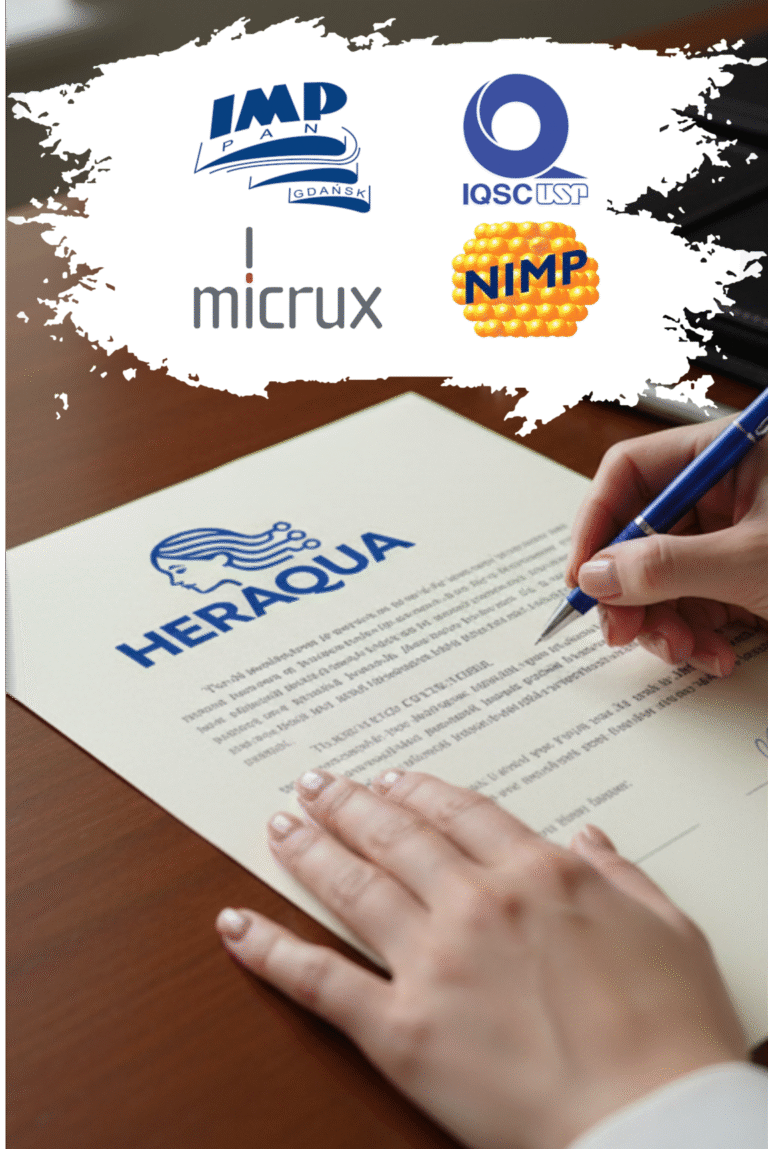
We are delighted to announce the official start of the HERAqua project, following the contract signing (agreement no. UMO-2024/06/Y/ST11/00223) with the National Science Centre of Poland
International consortium bringing together teams from Poland, Brazil, Spain, and Romania, we are embarking on an exciting scientific journey to develop next-generation solutions for hormone monitoring dedicated for human body fluids and water samples. According to the agreement, implementation starts on 1 September 2025 and we have 36 months to fulfill our goals.
HERAqua aims to create an innovative, eco-friendly microfluidic device utilizing advanced nanocarbon-based electrochemical sensors to address the critical issue of hormone contamination and contribute to both human health and environmental protection.
We believe that the strong collaboration within our global consortium will allow us to achieve all our goals and make a positive impact for science and society.
Let’s begin this shared adventure – stay tuned for more updates and milestones!
1/09/2025
Project Launch: HERAqua Begins!
We are delighted to announce the official start of the HERAqua project, following the contract signing (agreement no. UMO-2024/06/Y/ST11/00223) with the National Science Centre of Poland
International consortium bringing together teams from Poland, Brazil, Spain, and Romania, we are embarking on an exciting scientific journey to develop next-generation solutions for hormone monitoring dedicated for human body fluids and water samples. According to the agreement, implementation starts on 1 September 2025 and we have 36 months to fulfill our goals.
HERAqua aims to create an innovative, eco-friendly microfluidic device utilizing advanced nanocarbon-based electrochemical sensors to address the critical issue of hormone contamination and contribute to both human health and environmental protection.
We believe that the strong collaboration within our global consortium will allow us to achieve all our goals and make a positive impact for science and society.
Let’s begin this shared adventure – stay tuned for more updates and milestones!